
Why Freelance Clients Ghost After Hearing Your Price (And How to Fix It)
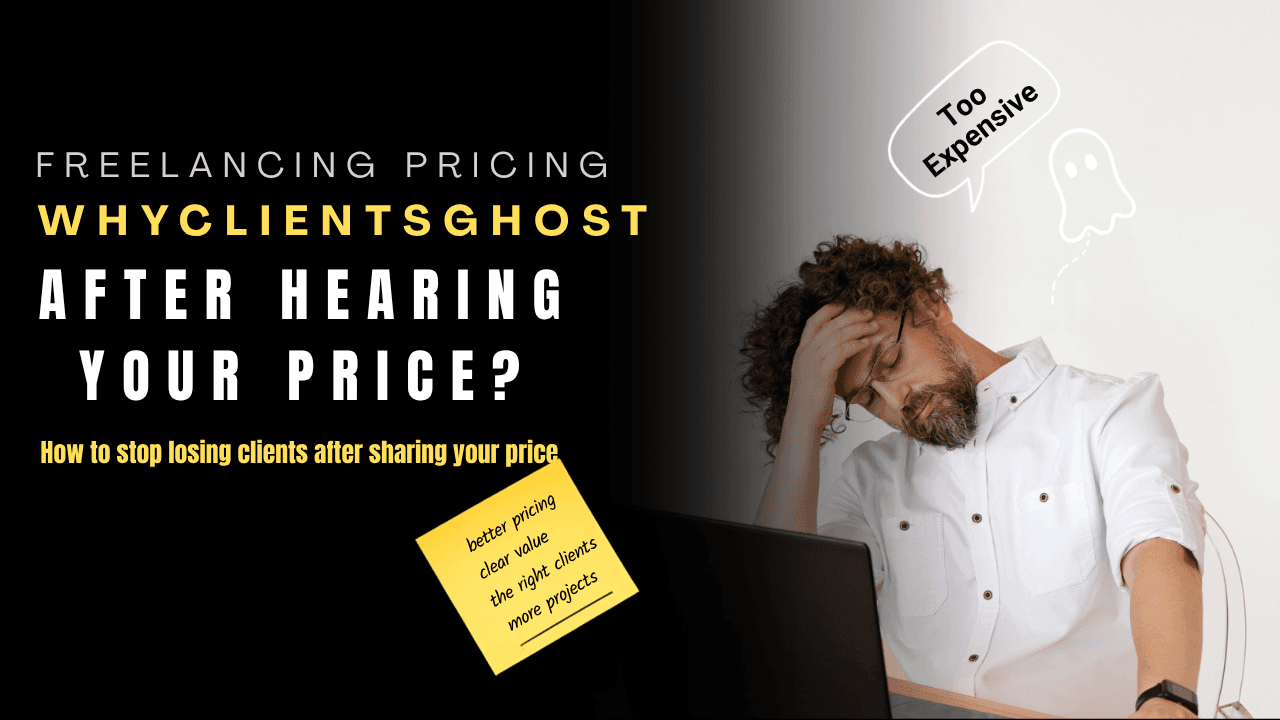
The discovery call goes well. The potential client likes your portfolio. They ask good questions about the project and seem excited about the timeline. You feel the energy. Then you mention the price - or send the proposal - and everything changes.
Replies slow down. Let me think about it becomes silence. Or they say the number is higher than expected and stop responding. This pattern frustrates many freelancers, especially those still building their client base. The design, writing, development, or editing work feels solid. The sales side feels broken.
If this sounds familiar, the problem is rarely that your rate is automatically wrong. More often, something else in the process is creating the gap. Understanding the real reasons clients disappear after pricing helps you change the outcome without constantly lowering your fees.
Why Clients Disappear After the Price Comes Up
Price is often the point where interest turns into a real decision. Up to that point, the conversation can stay comfortable and positive. Once a number appears, the client has to decide whether the project fits their budget, priorities, and how much risk they are comfortable taking.
Several common reasons explain the silence:
The client never had a realistic budget for the type of work you do. They hoped the project would cost far less.
You are talking to people who are not a good match for your service level. They may want professional results but only have money for basic or template-level work.
The client does not fully understand what they are buying. A single number without clear deliverables feels abstract and expensive.
Pricing enters the conversation too late. By then, the client has already formed their own (often low) expectation.
The project scope stayed vague. Without clear boundaries, any price can feel risky.
The client is comparing several freelancers and treating price as the main filter.
Some people were never serious about moving forward. Talking about the idea felt good. Committing money did not.
Not every ghosting situation has the same cause. Sometimes the client genuinely cannot afford the work. Other times they could afford it but never connected the price to a clear result. Treating every silence as my price is too high leads many freelancers to undercharge or take on projects that are not a good fit.
“Too Expensive” Versus the Wrong Client
When a potential client says the price is too high, it is easy to assume the solution is to charge less. That reaction often creates bigger problems later.
Some clients will never be a fit for your rates, no matter how clearly you explain the work. They are shopping for the lowest possible option. Others can pay but need to see exactly what the investment covers before they feel comfortable.
Lowering your price every time someone objects usually attracts more of the first group. It also trains serious clients to expect discounts. Over time, this reduces the money you keep after your costs, increases the chance of scope creep, and makes the work less sustainable.
A better approach is to separate the two situations. If the client cannot afford the service at a fair rate, the cleanest outcome is often to part ways politely. If the client can afford it but needs more clarity, the solution is better communication and a clearer offer - not an automatic price cut.
Should You Ask About Budget Early?
Many freelancers avoid budget questions because they feel awkward or aggressive. In practice, a calm budget conversation early saves everyone time.
You do not need to demand an exact number. You can ask for a range or share your own typical range and check whether it matches their expectations. Simple questions work:
What range did you have in mind for this project?
Most projects like this usually fall between X and Y depending on scope. Does that line up with what you planned?
Is there a budget range you are working within so I can shape the options properly?
These questions can help you identify people who are unlikely to hire you at your current price range. Serious clients usually answer thoughtfully or ask clarifying questions. People who dodge the topic repeatedly often were not ready to buy.
Asking early does not mean you refuse to talk to anyone without a perfect budget. It means you stop spending hours writing detailed proposals for clients who expected something far cheaper. You can still decide to send a lighter proposal or adjust scope if the range is lower but the project still makes sense.
Price on the Call or in the Proposal?
There is no single correct rule. The better choice depends on the project complexity and how well you understand the client’s goals.
On a discovery call, it often works well to discuss goals, required features, timeline, and a rough price range. This keeps the conversation grounded. The client hears a realistic neighborhood of numbers while you are still on the call and can react in real time.
After both sides understand the scope, a written proposal becomes useful. The proposal should recap the goals, list the deliverables, outline the process, and present clear options or a single well-defined package. Sending a proposal into silence with no prior price discussion is riskier. The client opens it alone, feels sticker shock, and may never reply.
Some freelancers prefer to walk through the proposal on a second short call. Others send it and schedule a follow-up. The key is reducing surprise. When the client already understands the work and the approximate range, there is usually less room for an unexpected price shock.
Why a Bare Number Feels Expensive
A price without context is easy to reject. Compare these two versions:
Website redesign - $3,500.
Versus:
Website redesign that includes mobile-friendly pages, updated contact forms, basic on-page setup, launch support, and two rounds of revisions based on your feedback - $3,500.
The second version gives the client a clearer idea of what the price includes. The same number feels more concrete. When the proposal or conversation lists the actual deliverables, timeline, communication style, and support included, the price stops looking like an arbitrary fee and starts looking like a defined package of work.
Always connect the number to outcomes the client cares about. For a designer, that might mean clearer brand recognition or higher conversion on key pages. For a developer, it might mean fewer technical problems or faster loading. For a copywriter, it might mean messages that actually speak to the target audience. Keep the language simple and focused on what the client will have when the project is finished.
Using Packages Without Creating Confusion
Some freelancers offer three options: a basic version, a recommended middle option, and a more complete version. This approach can help when the client is unsure how far they want to go.
Packages work best when each option has a clear difference in scope. The basic version covers the essentials. The middle version includes the most common extras. The higher option adds extra support, more pages, or additional revisions. Presenting choices often feels safer to a buyer than a single take-it-or-leave-it number.
Packages are not required for every project. On smaller or highly custom jobs, a single clear offer is cleaner. Too many options can overwhelm some clients. Use packages when they genuinely help the client decide, not as a default sales tactic.
Do Not Panic and Discount Immediately
When a client says the price is too high, the instinct for many freelancers is to offer a lower number right away. This often backfires.
Instant discounts reduce your income, attract clients who will keep pushing for more, and make it harder to hold rates later. They also send the message that your first number was not real.
A stronger response is to protect the rate and adjust the scope instead. If the budget is lower, remove some features, reduce the number of pages or deliverables, or shorten the support period. The client still gets professional work within their budget. You still get paid fairly for the time involved.
This approach keeps the relationship clearer and protects your confidence in the value of the work.
Practical Ways to Respond When Clients Push Back on Price
Here are natural responses you can adapt. They are not magic scripts that close every deal. They simply keep the conversation open and professional.
When the client says the price is too high:
I understand. The current scope includes [list main items]. If we need to work within a tighter budget, we could remove [specific items] and focus on the core pieces. Would that direction make more sense?
When the client needs time to think:
That makes sense. Take the time you need. I’m happy to answer any questions that come up while you review it.
When the client stops replying after the proposal:
Send a short, polite follow-up after a few days. A second follow-up a week later is usually enough. After that, one final message is fine: Just checking in case the timing has changed or if you decided to move in a different direction. Either way, no problem - wishing you the best with the project. Then stop. Continuing to chase rarely helps.
When the client asks for a discount:
I’m not able to lower the rate for the same scope, but I can adjust what is included so it fits the budget better. Which parts are most important to you?
When the client mentions a cheaper freelancer:
There are always lower-priced options. The difference is usually in the level of detail, the process, and the support after delivery. If those matter for this project, I’m happy to walk through what is included in this proposal.
Stay calm and factual. Getting defensive or over-explaining rarely improves the outcome.
Spotting Poor-Fit Leads Earlier
Spending hours on proposals for people who were never going to hire you is exhausting. A few practical questions before deep work help:
What is the main goal of this project?
What does success look like for you?
What is the ideal timeline?
Who will make the final decision?
Is there an approximate budget range?
Which features or outcomes are must-haves versus nice-to-haves?
How urgent is the project?
You do not need every answer in the first message. But patterns appear quickly. Clients who cannot describe the goal, refuse any budget discussion, or want everything done “as soon as possible” for a very low price are often poor fits.
A Simple Follow-Up System After Ghosting
If a proposal goes unanswered:
First follow-up after 3-5 business days. Keep it short and helpful.
Second follow-up about a week later. Reference the proposal briefly and offer to clarify anything.
Final polite message. Leave the door open without pressure.
Then move on. Some clients return weeks or months later. Most do not. Protecting your time matters more than chasing every silent lead.
What to Track So You Can See the Real Pattern
Keep simple records of:
Number of leads
How many reply and book calls
How many receive proposals
Prices or ranges discussed
Common objections
Deals won and lost
Reasons given for not moving forward
After a few weeks or months, patterns become clear. You may discover that most lost deals share the same issue - budget mismatch, unclear scope, or weak follow-up. The data tells you where to improve instead of guessing.
A Realistic 30-Day Improvement Plan
Week 1: Review recent leads and proposals. Note when the conversation went quiet and what the price discussion looked like. Look for repeated patterns.
Week 2: Tighten your qualification questions and write clearer descriptions of what each type of project includes. Update your inquiry form or website if needed so people see a realistic range earlier.
Week 3: Test bringing a rough price range into the discovery conversation and sending proposals only after some alignment. Try presenting two or three scoped options when it fits.
Week 4: Review what changed. Note which conversations felt better and which still went silent. Adjust one or two things and repeat the cycle.
This is not a promise of instant clients. It is a practical way to stop repeating the same frustrating pattern.
Closing Thought
When clients disappear the moment price appears, the automatic reaction is often to charge less. That is rarely the best long-term answer.
The more useful work is improving lead quality, clarifying the offer, discussing money earlier, showing exactly what the client receives, and protecting your rate by adjusting scope when needed. The goal is not to convert every person who talks to you. The goal is to spend more time with people who understand the work, can afford it, and are a genuine fit.
Once that shift happens, the pricing conversation becomes less anxious and more straightforward. You still hear no sometimes. But you hear fewer sudden silences, and the clients who stay are usually better to work with.